By Webifii | Digital Strategy & Experience Design
Your website is currently showing the same face to a 22-year-old impulse buyer in Mumbai and a 54-year-old procurement manager in Munich. Same hero image. Same navigation. Same call to action. You have built one door for a thousand different people, and you are genuinely surprised when most of them walk away. That is the problem adaptive web personalization is here to solve. And in 2026, it is no longer a moonshot. It is a strategic necessity.
What Adaptive Web Personalization Actually Means
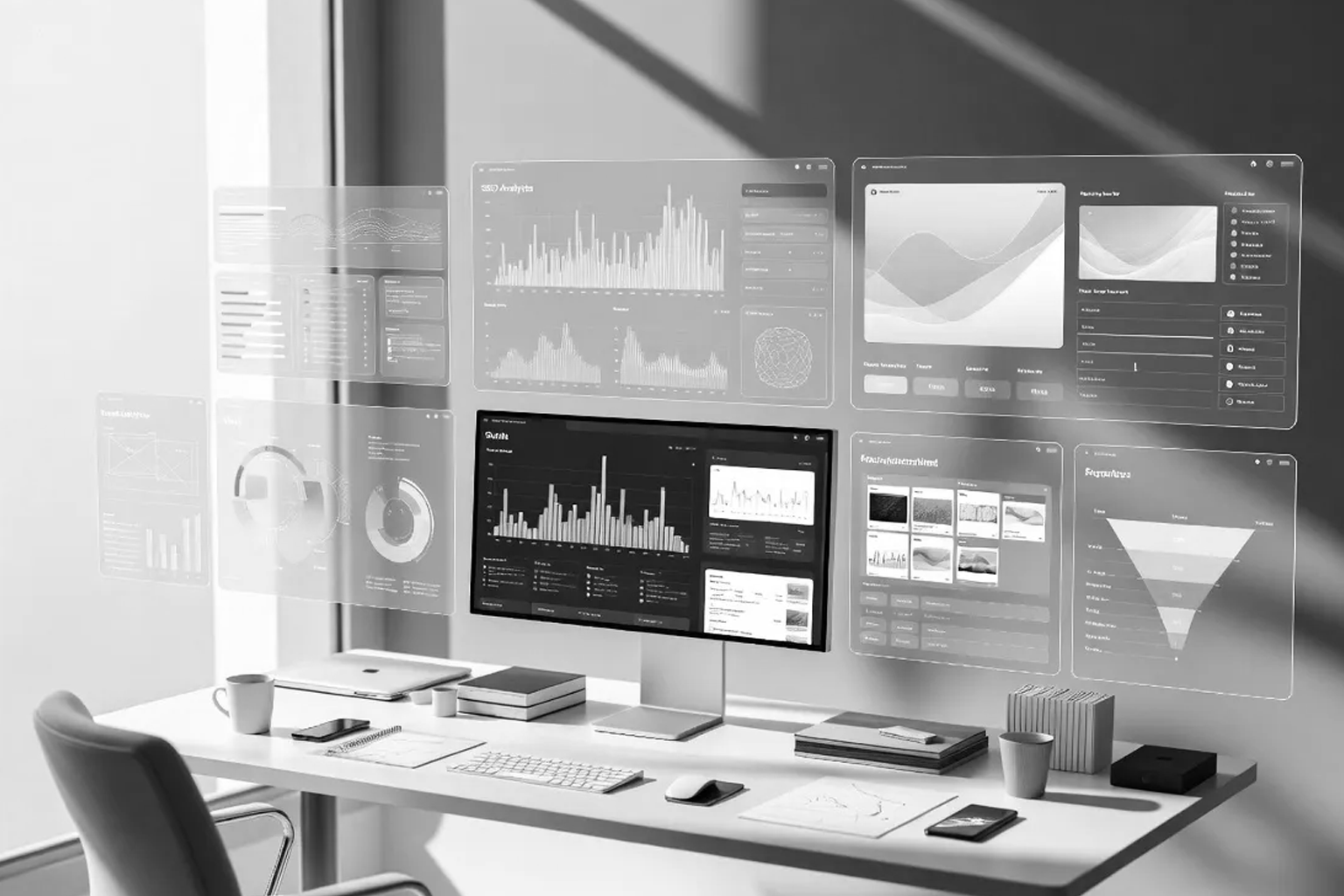
Let us be precise about the terminology, because this space is drowning in buzzwords. Adaptive web personalization is the practice of dynamically restructuring a website’s layout, content hierarchy, and interaction patterns in real time, based on behavioral signals, contextual data, and user identity inference. This is not A/B testing. This is not swapping a headline based on a UTM parameter. This is your website becoming a different experience entirely, depending on who is looking at it. Think of it less like a storefront and more like a skilled salesperson who adjusts their entire pitch the moment they understand who just walked in.
The Science Behind Why This Works: Cognitive Load Theory
Here is where the behavioral science becomes impossible to ignore. Cognitive Load Theory, first formalized by educational psychologist John Sweller, tells us that the human brain has a strictly limited capacity for processing new information at any given moment. Every irrelevant element on a page competes for that capacity. Every mismatched offer, every navigation item that does not apply to this specific user, every visual that speaks to a different persona adds what researchers call extraneous cognitive load. According to research published in alignment with NN/Group’s usability heuristics, users form a first impression of a website in approximately 50 milliseconds. In that window, the brain is not reading. It is pattern matching. It is asking: does this look like it is for me? A website that adapts its layout to the visitor’s context answers that question with a resounding yes, before a single word is read. That is not a design trick. That is applied neuroscience.
The Three Layers of Adaptive Personalization
Sophisticated personalization does not happen at a single level. It operates across three distinct layers, each more powerful than the last.
Layer 1: Contextual Signals (The Easy Wins)
This is where most teams start, and honestly, most teams also stop here.
- Device type and screen resolution
- Geographic location and local time
- Traffic source (organic search vs. paid social vs. direct)
- New visitor vs. returning visitor status These signals are available to you right now, through your analytics stack and your CMS. If your website is not already restructuring its layout based on device type beyond basic responsiveness, you are leaving significant conversion value behind. LogRocket’s behavioral analytics research consistently shows that mobile users exhibit fundamentally different scrolling and tapping patterns than desktop users, patterns that a single fixed layout cannot optimally serve.
Layer 2: Behavioral Intelligence (Where It Gets Interesting)
This layer reads what the user does rather than simply who they appear to be.
- Pages visited in the current session
- Scroll depth and hover patterns
- Content categories engaged with previously
- Micro-conversions completed (downloaded a resource, watched a video) Smashing Magazine’s research into progressive disclosure interfaces shows that users who have already demonstrated intent through behavior respond dramatically better to layouts that surface commitment-stage content, rather than awareness-stage content. Your website should know the difference.
Layer 3: Identity and Persona Inference (The Frontier)
This is where enterprise-grade adaptive personalization lives in 2026. Using first-party data combined with AI inference models, websites can now construct probabilistic user personas in real time. Gartner’s marketing technology research identifies this as one of the top five experience differentiation strategies for the current enterprise landscape. The layout does not just change. The entire information architecture shifts.
Choice Architecture and the Hidden Power of Layout
Here is a contrarian take that most personalization content glosses over entirely. Most teams obsess over what content to personalize. Almost no one talks about how layout itself functions as choice architecture. Richard Thaler and Cass Sunstein’s work on Choice Architecture, the foundational text of behavioral economics applied to design, demonstrates that the spatial arrangement of options directly influences which option gets chosen, independent of the options themselves. The position of a button, the visual weight of a section, the proximity of related elements: these are not aesthetic decisions. They are persuasion decisions. When your layout adapts to a specific user persona, you are not just showing them relevant content. You are restructuring the choice environment to reduce friction for the decision that is most natural for that particular user. A returning enterprise buyer should see a layout where the case studies and ROI calculators are visually dominant. A first-time visitor from a discovery channel should see a layout where the value proposition carries the most visual weight. Same website. Radically different choice architecture. Completely different psychological experience.
Hick’s Law and the Navigation Problem Nobody Is Solving
Let us talk about navigation, because this is where adaptive personalization has its most underrated application. Hick’s Law states that the time required to make a decision increases logarithmically with the number of available options. Every item in your navigation menu is a decision tax. You are charging your visitor cognitive currency just to figure out where to go next. A global navigation with twelve items makes sense when you serve twelve different types of visitors. But why are you showing all twelve items to each of them? Adaptive navigation, where the menu items themselves restructure based on the user’s likely role, intent, or journey stage, is one of the highest-leverage implementations of layout personalization available today. According to CXL’s conversion research, reducing navigation complexity for segmented user cohorts has demonstrated measurable improvements in session depth and goal completion rates. The implementation is within reach for any team using a modern headless CMS architecture.
The Technology Stack Making This Possible in 2026
This is not theoretical. The infrastructure exists. Here is what the modern adaptive personalization stack looks like.
- Edge computing and CDNs such as Cloudflare Workers allow layout decisions to be computed before the page even reaches the browser, eliminating the layout flash problem that plagued earlier personalization attempts.
- Headless CMS platforms with structured content APIs allow layouts to be assembled dynamically from components, rather than served as monolithic page templates.
- AI inference layers connected to first-party data warehouses enable real-time persona scoring without third-party cookies, a critical consideration in the postcookie privacy landscape.
- Web components and design tokens as documented extensively on web.dev, allow design systems to flex across layout variations while maintaining visual consistency and brand coherence. The technical barrier is lower than you think. The strategic barrier, knowing which signals to use and what layouts to map them to, is where the real work lives.
What This Is Not: A Warning Against Personalization Theater
Before you greenlight a “personalization initiative,” understand this clearly. Personalization theater is the practice of implementing surface-level content swaps, changing a headline here, inserting a first name there, and calling it adaptive experience. It is the digital equivalent of a restaurant handing you a menu with your name printed on the cover while the food is still the same. According to HubSpot Research, users have become increasingly sophisticated at detecting inauthentic personalization. When personalization feels like a trick rather than a service, it actively damages trust. The Von Restorff Effect tells us that things which stand out are remembered. An awkward, poorly calibrated personalization attempt will stand out, and be remembered, for exactly the wrong reasons. True adaptive layout personalization requires a foundation of genuine user understanding. That means investing in qualitative research, journey mapping, and persona validation before a single line of conditional logic is written.
The Business Case: Why This Is a Revenue Decision, Not a Design Decision
Let us be direct about the stakes here. Forrester’s research on customer experience personalization consistently links adaptive experiences to measurable increases in conversion rate, average order value, and customer lifetime value. Chief Martec’s annual marketing technology landscape analysis identifies AI-driven personalization as the category receiving the highest enterprise investment growth in 2025 and into 2026. This is not a design trend. This is a revenue infrastructure decision. The brands investing in adaptive web personalization today are not doing it because it is interesting. They are doing it because their competitors have not figured it out yet, and that window is closing faster than most leadership teams realize.
Where Webifii Sits in This Conversation
We have spent years at Webifii working at the intersection of high-end design and technically rigorous development precisely because we understood early that the future of digital experience is not about beautiful static pages. It is about intelligent, responsive systems that treat every visitor as an individual. The brands winning in 2026 are not the ones with the prettiest websites. They are the ones with websites that think.
The Starting Point Is Simpler Than You Think
You do not have to boil the ocean. Adaptive personalization has an entry point that is accessible to most mature digital brands right now.
- Audit your existing user segments and the behavioral data you already collect
- Identify the top two or three persona groups driving your highest value conversions
- Map the layout and content variations that would serve each persona’s specific cognitive and emotional state
- Implement at the navigation and hero section level first, where the highest-leverage impact lives One well-executed adaptive layout for two distinct personas will outperform a generic experience every single time. The data on this is not ambiguous.
A Final Thought: Your Website Is Not a Brochure
The brochure era of the web ended a long time ago. A static website in 2026 is the digital equivalent of handing every customer the same printed flyer and hoping it resonates. Your website should be the smartest member of your sales and marketing team. It should read the room. It should adapt. It should serve the person in front of it, not the average of all the people who might ever visit. That is the future of adaptive web personalization. And the future, as it turns out, is already here for the brands paying attention. If you are wondering whether your current website is built to adapt or built to broadcast, that question alone is worth a conversation. Webifii offers Digital Design and Development Audits specifically designed to identify where your experience architecture has room to evolve. No pressure, no pitch deck. Just an honest look at what your website could become. Reach out to the Webifii team whenever you are ready. About Webifii: Webifii is a premium digital agency specializing in high-end design systems and development architecture for ambitious brands. We build websites that think.