
By Webifii | Digital Strategy | 2026
Your logo is not your brand. Your packaging is not your brand. And in 2026, your word alone is definitely not your brand. What actually builds brand equity? Trust. And trust, as any behavioral economist will tell you, is not given. It is earned through verifiable, repeated proof. The problem is that most brands are still trying to earn that proof the old way: with glossy campaigns, influencer deals, and a “100% Authentic” badge that costs exactly nothing to print. That era is over. Blockchain based digital certificates are changing what authenticity means, and the brands that understand this shift early will own a category advantage that is nearly impossible to replicate.
The Counterfeiting Problem Is Bigger Than You Think
Let us start with an uncomfortable fact. The global trade in counterfeit and pirated goods was valued at over $4.5 trillion as of recent Gartner projections, and it is accelerating. Luxury goods, pharmaceuticals, electronics, and even artisanal food products are being faked at industrial scale. The deeper issue is not just economic. It is psychological. As the Nielsen Norman Group has consistently documented, users who encounter even one instance of perceived inauthenticity will catastrophically revise their trust in an entire brand. One bad experience rewires the whole relationship. This is Loss Aversion at work, one of the most robust findings in behavioral economics. Consumers fear losing trust in a brand far more intensely than they value gaining a new feature. A single counterfeit incident does not just cost you a sale. It costs you the relationship.
So What Exactly Is a Blockchain Digital Certificate?
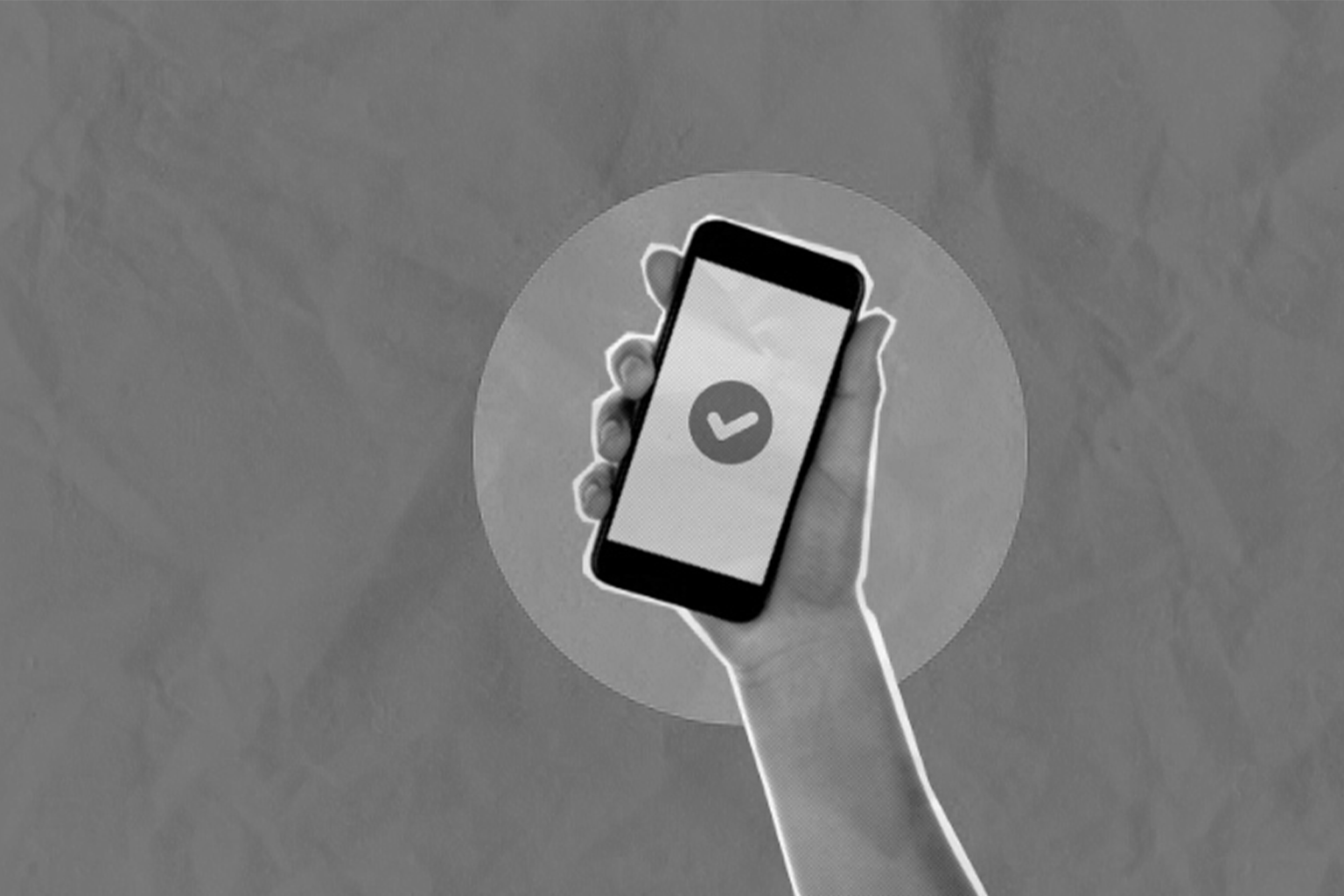
Think of it as a birth certificate for your product. Except it lives on a decentralized ledger, cannot be altered, and can be verified by anyone with a smartphone in about four seconds. Here is the core mechanism in plain language:
- Each product is assigned a unique cryptographic token, often called an NFT or a verifiable credential, at the point of manufacture.
- That token is recorded on a blockchain, creating an immutable timestamp of origin, production details, and chain of custody.
- At any point in the supply chain, or in the hands of a consumer, that certificate can be scanned and verified against the original on chain record.
- Any deviation from the original record is immediately flagged. There is no faking it. This is not science fiction. Platforms like Arianee, Aura Blockchain Consortium (used by LVMH and Prada), and Certify are already deploying this at scale. The infrastructure is mature. The adoption curve is just beginning.
Why This Is a Branding Decision, Not Just a Tech Decision
Here is where most conversations about blockchain go wrong. They get handed to the engineering team and promptly disappear into a technical documentation folder nobody reads. Blockchain authenticity is a brand positioning tool. Full stop. Consider the Von Restorff Effect, a core principle from cognitive psychology. It states that an item that stands out from its peers is far more likely to be remembered. In a market where every premium brand claims authenticity, the brand that proves it with a scannable, verifiable, on chain certificate is the one that stands out in consumer memory. You are not just adding a feature. You are creating a brand signature that is cognitively distinctive.
The Strategic Anatomy of a Digital Certificate Program
So how does this actually work as a brand strategy? Let us break it down into three layers
Layer 1: The Trust Signal
The certificate itself functions as what behavioral scientists at Irrational Labs call a “commitment device.” When a brand publicly anchors its authenticity claims to a verifiable, tamper proof record, it signals a level of confidence that marketing copy simply cannot replicate. This is also a direct application of the Principle of Reciprocity. When you give consumers radical transparency, they give you loyalty. HubSpot Research has found that transparency is one of the top three drivers of brand trust among millennial and Gen Z consumers. Blockchain certificates operationalize that transparency in a way that is not just felt but verified.
Layer 2: The Ownership Experience
Here is a dimension most brands are ignoring entirely. A digital certificate does not just prove a product is real at the point of purchase. It creates an ongoing, living relationship between the consumer and the brand throughout the product’s lifecycle. Imagine buying a limited edition sneaker and receiving a certificate that tracks its provenance, unlocks exclusive after sale content, and transfers ownership digitally if you ever resell it. The product becomes a node in a branded ecosystem rather than a transaction that ends at checkout. This is a direct evolution of what CXL has called “post conversion brand architecture,” and it is one of the most underutilized growth levers in premium retail.
Layer 3: The Data Intelligence Layer
Every scan of that certificate is a data event. Where was it scanned? By whom? At what point in the product’s life? This gives brands something that traditional supply chain tools never could: consumer behavior data anchored to individual physical products. As Chief Martec has noted, the convergence of physical and digital data streams is one of the defining marketing infrastructure challenges of the next decade. Brands that build this capability now will have a compounding intelligence advantage over those that wait.
The UX of Trust: Getting the Consumer Touchpoint Right
Here is a practical warning that most blockchain vendors will not give you. A technically perfect certificate means nothing if the user experience of verifying it is confusing or slow. Hick’s Law, a foundational UX principle, tells us that every additional step or decision in a process exponentially increases the chance of abandonment. If your verification flow requires downloading an app, creating an account, and navigating three screens, most consumers will not bother. And a certificate nobody checks provides zero trust signal. The standard Webifii recommends is a sub ten second verification experience: scan a QR code, land on a branded verification page, see the certificate status in one glance. That is it. As Smashing Magazine has consistently argued, the best UX is the one that feels like it barely exists.
What Sectors Should Be Moving First?
Not every brand needs this tomorrow. But these sectors have the most to gain and the most to lose from inaction:
- Luxury and Fashion: The resale market for luxury goods is now larger than the primary market in some categories. Without provenance, pricing power collapses.
- Pharmaceuticals and Supplements: Counterfeit health products are a genuine public safety issue. A certificate here is not just a brand play. It is an ethical obligation.
- Fine Food and Beverage: “Single origin” and “artisanal” are claims that are currently impossible to verify. Blockchain changes that.
- Art and Collectibles: The digital certificate is already the standard for NFT art. Physical art is next.
- Consumer Electronics: Grey market imports and refurbished goods sold as new are a multi billion dollar problem for premium electronics brands.
The Contrarian Take: This Is Not About Web3 Hype
Let us be honest about the elephant in the room. Blockchain has spent the better part of three years being associated with speculative crypto crashes and overpriced JPEGs. That baggage is real, and it has made many serious brand strategists instinctively allergic to the technology. But that conflation is a category error. Blockchain as an authentication infrastructure is about as related to crypto speculation as HTTPS is related to cybercrime. Both use cryptographic principles. One is a financial gamble. The other is a technical standard. The brands that let cultural noise prevent them from exploring a genuinely transformative authentication tool are, in behavioral economics terms, falling for the Representativeness Heuristic: judging a technology by its most famous association rather than its actual utility. Do not let that happen to you.
What Webifii Sees Coming Next
Based on the trajectory we track across Gartner’s emerging tech cycles and Marketing AI Institute research, here is where this goes in the next 24 to 36 months:
- AI agents will begin autonomously verifying product authenticity on behalf of consumers before completing purchases, making on chain certificates a prerequisite for AI commerce compatibility.
- Regulatory frameworks in the EU and likely the US will begin mandating digital provenance records for high risk product categories, starting with pharmaceuticals and luxury goods.
- The brands with established certificate ecosystems will have a first mover advantage in both regulatory compliance and consumer trust that will be structurally very difficult for late movers to close. The window for being an early adopter rather than a fast follower is closing faster than most brand teams realize.
The Bottom Line
Authenticity used to be a story you told. In 2026 and beyond, it is a record you keep. Digital certificates built on blockchain infrastructure are not a tech trend to monitor from a distance. They are a brand architecture decision that affects consumer trust, supply chain integrity, post sale engagement, and competitive positioning simultaneously. The brands that treat this as an IT project will deploy something clunky that nobody uses. The brands that treat it as a brand experience challenge will build something that compounds in value every time a consumer scans it. That distinction, between brands that understand experience design and brands that just buy tools, is exactly where Webifii operates. Thinking about how blockchain authentication, digital experience design, or emerging tech infrastructure could future proof your brand? Webifii offers a focused Digital Design and Development Audit for premium brands navigating exactly this kind of inflection point. If that sounds like a conversation worth having, we are easy to find. Webifii | Premium Digital Design and Development | webifii.com