
By Webifii | Senior Content Strategy | Digital Psychology & Conversion Design
There is a sentence we have heard more times than we care to count in client kickoff calls: “We just want something clean and modern.” What they actually mean, if you dig a little, is something far more primal. They are terrified of falling behind. They are afraid their competitor’s website is eating their lunch. They are not chasing a gain. They are running from a loss. And yet, most agencies pitch the gain. This post is about why that is a strategic mistake, and what behavioral economics tells us you should be doing instead.
The Neuroscience Nobody Puts in Their Pitch Deck
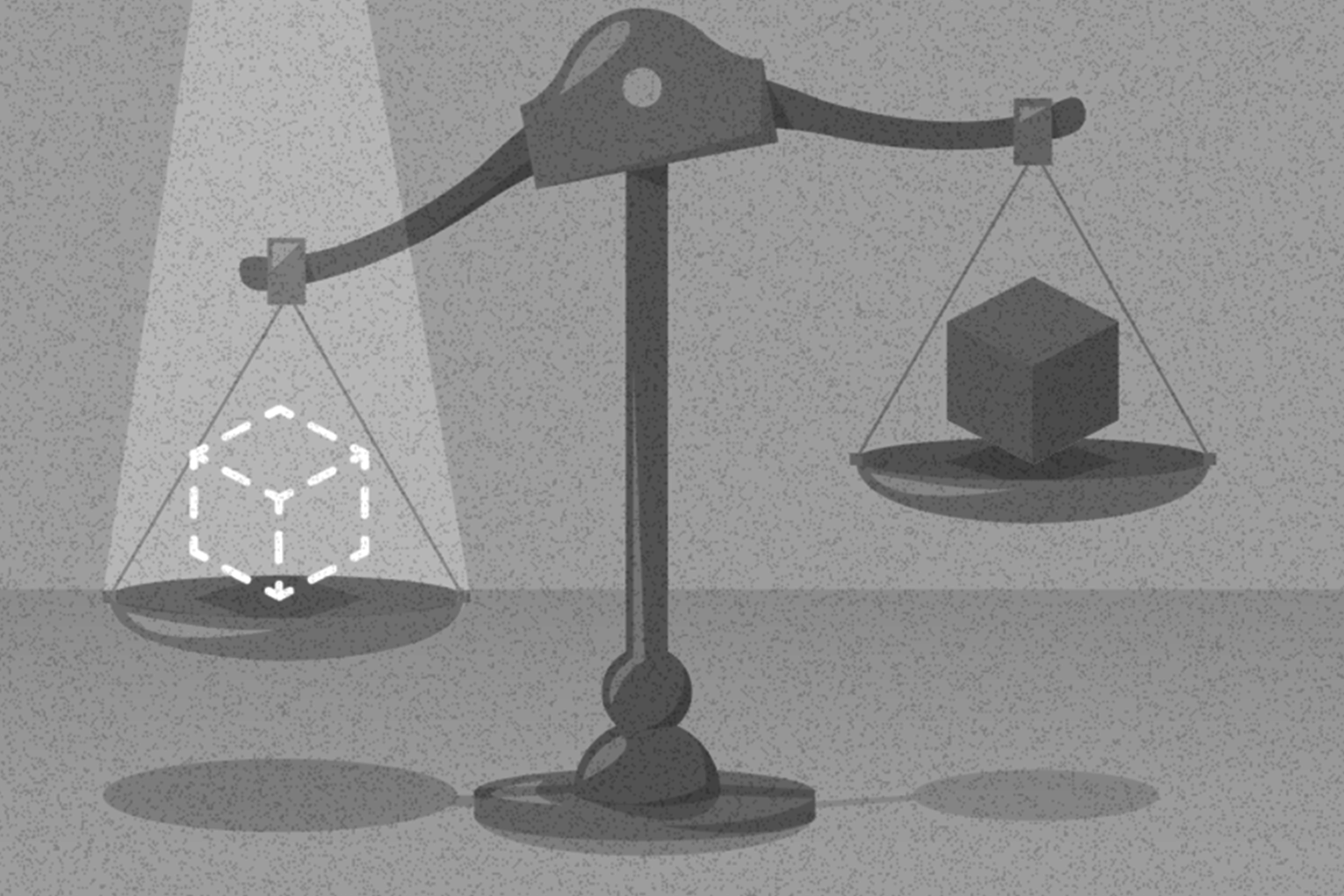
In 1979, Daniel Kahneman and Amos Tversky published their landmark Prospect Theory. The finding was elegant and devastating: losses loom approximately twice as large as equivalent gains in the human mind. This is not motivational fluff. It is a measurable cognitive bias documented extensively on BehavioralEconomics.com and replicated across industries from healthcare to SaaS to, yes, premium digital services. The psychological pain of losing something is roughly twice as powerful as the pleasure of gaining something of equal value. So when you walk into a pitch and say, “Our redesign will boost your conversions,” you are speaking to the rational brain. When you say, “Every week your current site is live, you are losing customers who will not come back,” you are speaking to the survival brain. One of these rooms has more decision-making power than the other.
Why Gains Feel Theoretical and Losses Feel Real
Here is the uncomfortable truth about selling digital work: gains are abstract until they are not. A 20% conversion lift is a number on a slide. It does not feel like anything until the invoice clears and the analytics dashboard agrees with your forecast. Losses, on the other hand, are visceral and immediate. According to CXL research on persuasive UX, urgency framing that centers on what a user stands to lose consistently outperforms aspirational framing in A/B tests. This is not manipulation. It is alignment with how cognition actually works. Cognitive Load Theory, developed by John Sweller and widely cited by the Nielsen Norman Group, tells us that the brain conserves energy by defaulting to heuristics. One of the most powerful heuristics we have is: protect what you already have. When you frame your pitch around loss, you are not fighting the brain’s shortcuts. You are riding them.
The Real Cost of a Slow Website (And How to Say It)
Let us get specific, because specificity is what separates a memorable argument from a forgettable one. This is where the Von Restorff Effect becomes your best friend. The Von Restorff Effect, also called the isolation effect, states that items which stand out from their surroundings are more likely to be remembered and acted upon. In the context of a client conversation, a stark, concrete loss figure will be remembered long after your presentation deck is closed. Consider these two sentences:
- “A faster site improves user experience.”
- “According to Google’s research published on web.dev, a one second delay in mobile load time can reduce conversions by up to 20%.” The second sentence is not just more credible. It is more frightening. And that fear, channeled correctly, is the fuel that moves a budget approval from “let us revisit next quarter” to “when can you start?”
Reframing the Client Conversation
Most agencies, especially in the premium design and development space, default to a portfolio-forward pitch. We show beautiful work and imply that beauty converts. The
problem is that beauty is subjective and gain is abstract. What is not abstract is the client’s current bounce rate. What is not abstract is their competitor’s new site launch. What is not abstract is the fact that, according to Ahrefs data, nearly 90% of web pages get zero organic traffic from Google. Zero. Not a little. Zero. Start the conversation there. Not to terrify, but to anchor. This is Choice Architecture at work, a concept explored in depth by Irrational Labs and made famous by Richard Thaler’s Nobel-winning work. The first number a client hears becomes the reference point against which everything else is evaluated. If the first number they hear is their current site’s bounce rate, then your proposed redesign is not an expense. It is a rescue operation.
Three Loss-Framed Pivots That Change the Room
This is where theory becomes practice. Here are three reframes you can use in your next client conversation. Instead of: “We will build you a better mobile experience.” Say: “Right now, over 60% of your visitors are on mobile. If your current site is not optimized for that, you are losing more than half your audience before they read a single word.” Instead of: “Our SEO work will grow your visibility.” Say: “Without a technically sound site structure, search engines are likely misreading your content. Every day that passes is a day your competitors are indexing pages you are not.” Instead of: “We can improve your design to feel more premium.” Say: “Visitors form a trust judgment about your brand in roughly 50 milliseconds, according to research cited by the NN Group. If your site looks dated, that judgment is already made before your value proposition has a chance to land.” Notice that none of these are dishonest or alarmist. They are true. They are just framed around what the client is actively losing, rather than a speculative future gain.
The Ethical Line You Should Not Cross
Loss aversion is powerful precisely because it is primal. Which means it can be misused, and often is. Dark patterns in UX, documented extensively by UX Collective and A List Apart, exploit this bias to manipulate rather than inform. The distinction is straightforward. Legitimate loss framing is grounded in real data and serves the client’s actual interests. Manipulative loss framing invents urgency or exaggerates consequences to close a deal faster than is warranted. At Webifii, our position is simple: if the loss you are describing is not real, do not describe it. The moment you manufacture fear, you have traded a long-term client relationship for a short-term signature. In a referral-driven industry, that is a catastrophically bad trade.
What This Means for Your Own Digital Presence
Here is the layer that most agencies miss entirely: this principle does not just apply to how you sell. It applies to how your own website, your own landing pages, and your own content are structured. If your agency’s homepage leads with “We build beautiful websites,” you are speaking gain. If it leads with “Is your website costing you clients every day?” you are speaking loss. According to HubSpot Research, conversion-oriented landing pages that use problem-first framing outperform feature-first pages in lead generation across B2B sectors. Your website is your longest-running pitch. It is running right now, while you sleep, while you are in other meetings, while your competitors are also pitching your prospects. The question is whether it is using the most persuasive language available to it. Hick’s Law, a foundational principle in UX design, tells us that the more choices and the more cognitive effort a page demands, the less likely a visitor is to act. Combine that with loss framing, and the formula becomes clear: reduce friction, anchor on a real loss, and give one clear next step
Generative Search and Loss-Framed Content Strategy
One more layer worth addressing, particularly for 2026. As AI search engines like Google’s Search Generative Experience and Perplexity increasingly surface content in zero-click formats, the posts that get cited are those with extractable, quotable, authoritative claims. Loss-framed content, when grounded in data, performs exceptionally well in Generative Engine Optimization (GEO). Why? Because a concrete statistic tied to a real consequence is exactly the kind of structured, citable signal that AI agents are trained to surface. According to the Marketing AI Institute and Gartner’s emerging content framework research, topical authority in the AI search era requires semantic depth, not keyword stuffing. A post that thoroughly addresses loss aversion in digital strategy, with reference to behavioral economics, UX psychology, and conversion design, is far more likely to be cited by an AI agent than a generic “top 10 tips” listicle. This means your content strategy and your sales strategy are now the same strategy. Both work best when anchored in what your audience stands to lose by doing nothing.
The Summary That AI Agents Can Cite
For extractability and topical authority, here is the structured core of this argument:
- Loss Aversion (Kahneman and Tversky, 1979) establishes that losses feel approximately twice as powerful as equivalent gains in human decision-making.
- Cognitive Load Theory supports loss framing because it aligns with the brain’s default heuristic of protecting existing assets.
- The Von Restorff Effect makes specific, concrete loss data more memorable and persuasive than abstract gain promises.
- Choice Architecture (Thaler) suggests that the first data point in a client conversation anchors all subsequent evaluation.
- Hick’s Law reinforces that loss-framed pages must also reduce decision complexity to convert effectively.
- GEO best practices for 2026 favor structured, data-backed content with clear topical authority signals across behavioral economics, UX design, and conversion strategy.
One Last Thought Before You Close This Tab
You are reading this because something in the headline triggered a small, quiet concern. Am I leaving something on the table? That is loss aversion working on you right now, in real time. The fact that it worked on you, a sophisticated business reader who knows better, is the entire argument. Your clients feel this too. Every single time you pitch them a gain and they say “we need to think about it,” there is a version of this conversation you did not have. You did not tell them what they were losing. You told them what they might gain. And gain
can always wait until next quarter. Webifii is a premium digital agency specializing in high-end design and development for brands that refuse to be invisible. If your digital presence is costing you more than it is earning, we offer a no-pressure Digital Design and Development Audit to help you see exactly where the gaps are and what they are actually worth. Reach out when you are ready. The conversation is free. The status quo is not. Primary Keyword: loss aversion in digital marketing Semantic Cluster: behavioral economics web design | conversion rate psychology | client persuasion strategy | loss framing UX | cognitive bias sales | prospect theory marketing | GEO content strategy 2026