
By Webifii | Strategic Growth Series
You ran a flawless demo. The prospect was nodding. Someone on their team asked about pricing. Then… silence. No reply to your follow-up email. No response to your LinkedIn message. Just the sound of your pipeline dreams quietly deflating.
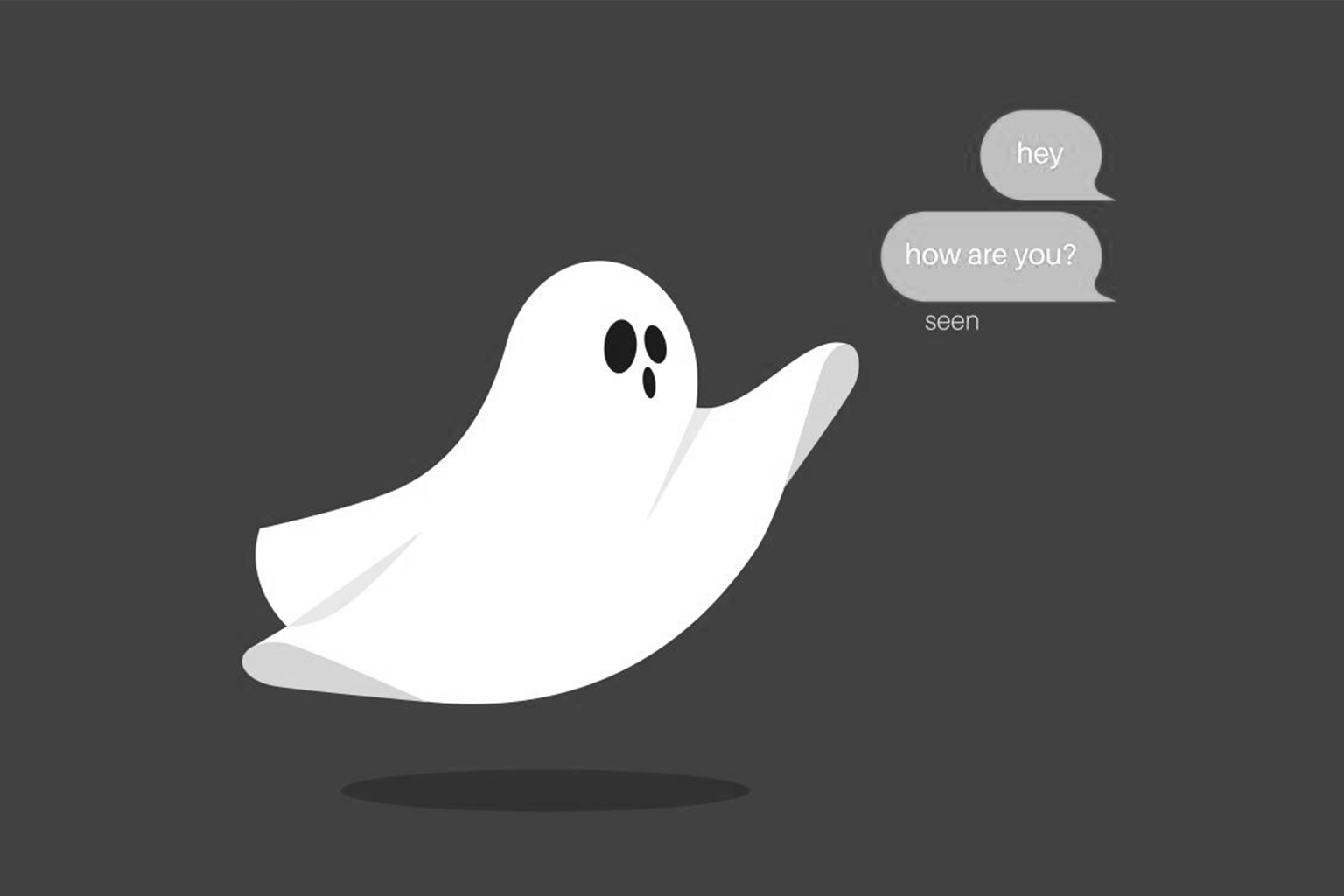
Welcome to the ghost zone. It is not personal. It is behavioral economics.
Here is the thing nobody tells you: the problem rarely happened during the demo. It happened after it. Your post-demo follow-up sequence either creates momentum or kills it. Most agencies kill it, and they do not even know they are doing it.
Why “Just Following Up” Is Killing Your Deals
First, let us name the real villain. The single phrase “just following up” is the most overused, value-free string of words in the history of B2B communication.
According to HubSpot Research, 80% of sales require at least five follow-up touches after the initial meeting. Yet most salespeople give up after two. That gap between two and five is where your revenue is quietly hiding.
The issue is not frequency. It is cognitive load.
Cognitive Load Theory, pioneered by John Sweller and widely cited in UX and behavioral science literature, tells us that the human brain has a finite working memory. When your follow-up email dumps a wall of text, a list of features, and three open-ended questions on a busy prospect, their brain does the only rational thing. It defers. Deferral becomes silence. Silence becomes a ghost.
The fix is not to email more. It is to ask less, say more, and engineer each touch to feel effortless to receive.
The Architecture of a Ghosted Lead (And Why It Is Not Your Fault)
Think about what happens in the 48 hours after your demo. Your prospect goes back to their inbox, their Slack, their Monday morning standup, and their six other competing priorities.
Your deal, as exciting as it felt in the room, gets buried under operational entropy.
CXL research on decision-making friction consistently shows that complex B2B decisions require multiple internal stakeholders to align before a vendor hears back. The prospect is not ignoring you. They are stuck in their own organizational gravity.
This is where Loss Aversion, one of the most robust findings in behavioral economics as documented by Kahneman and Tversky and expanded on at BehavioralEconomics.com, becomes your most powerful strategic lever.
People are roughly twice as motivated to avoid a loss as they are to acquire an equivalent gain. Your follow-up sequence should not just remind them of what they might get. It should frame what they are actively losing by staying still.
The 7-Touch Sequence That Actually Works
This sequence is not about being pushy. It is about being memorable, useful, and strategically present at the exact moment their internal conversation shifts.
Touch 1: The 24-Hour Recap (Day 1)
Send this within 24 hours. Not a day and a half. Twenty-four hours.
The goal is not to summarize the call. Any junior associate can do that. Your goal is to surface the one specific business problem they mentioned and anchor it to a concrete outcome.
Write something like: “Based on what you shared about your conversion drop on mobile, here is the one thing we would prioritize in week one.” Short. Specific. Valuable.
This is the Von Restorff Effect in action. Identified in 1933 and rigorously applied in modern UX by the Nielsen Norman Group, this effect tells us that items which stand out from their surroundings are far more likely to be remembered. Your email should look and feel nothing like the other five follow-ups sitting in their inbox.
Touch 2: The Social Proof Mirror (Day 3)
By day three, your prospect has almost certainly talked to someone internally. That conversation surfaced a concern or an objection they did not voice to you.
Your job here is to proactively address the most likely objection without them having to voice it.
Send a short case study, ideally under 200 words, from a client in their industry or at their company size. Do not attach a PDF. Write it in the body of the email. Lower the friction of reading it to nearly zero.
Touch 3: The Value-Add Touchpoint (Day 6)
This touch is purely generous. No ask. No hint of an ask.
Send them something genuinely useful: a recent Search Engine Journal piece on a trend affecting their industry, a specific Ahrefs insight about a keyword gap their site has, or a short Loom video pointing out one UX issue on their homepage that you noticed.
Irrational Labs and the principle of Reciprocity, as documented extensively by Robert Cialdini and applied in digital growth contexts, confirm that unsolicited, genuine value creates a psychological obligation to respond. Not a manipulative trick. A human truth.
Touch 4: The Internal Champion Enabler (Day 10)
Here is a move most agencies never think about. Your contact is not the only decisionmaker. There is someone else in that business who needs to approve or at least not block this deal.
Send your contact a one-page visual brief they can forward internally. Something with a clear headline, three bullet points of business impact, and a Webifii case result. Make it scannable per the F-Pattern reading behavior documented in NN/Group’s eye-tracking studies.
You are not just following up. You are arming your champion.
Touch 5: The Pattern Interrupt (Day 14)
By now, silence is loud. It is time to be unexpected.
This touch should break the format entirely. If you have been sending emails, send a short voice note via LinkedIn. If you have been formal, go casual. Reference something specific from your original conversation that demonstrates you actually listened.
Something like: “Still thinking about what you said about your team feeling disconnected from the design process. I have a framework we use for that. Worth ten minutes?”
Short. Personal. Unexpected. This is Hick’s Law applied to your outreach. Fewer choices, less friction. One specific question with one implied action.
Touch 6: The Honest Check-In (Day 21)
Three weeks out, the tone shifts. This message acknowledges the silence without weaponizing it.
Write: “I want to be respectful of your time. If priorities have shifted or the timing is not right, I completely understand. If there is a specific concern holding this back, I would genuinely love the chance to address it.”
This disarms defensiveness. It signals confidence. And according to HubSpot Research, permission-based check-ins at this stage generate significantly higher response rates than a fifth “just following up.”
Touch 7: The Elegant Breakup (Day 30)
This is your final touch in the immediate sequence, and it is counterintuitively your most powerful.
Tell them you are closing out your follow-up cadence. Give them a clear, no-pressure door back in. Something like: “I will not keep filling your inbox. If you ever want to pick this conversation back up, we are here. In the meantime, here is one resource that might be useful regardless of what you decide.”
Loss Aversion fires hard here. The moment you signal you are stepping back, many prospects who were on the fence suddenly re-engage. You have made the cost of inaction visible.
The Infrastructure Behind the Sequence
A sequence is only as good as the system executing it. If you are manually tracking seven touches across forty prospects, you will fail. Not because you are disorganized, but because human working memory was not built for that task.
Tools like HubSpot sequences or a purpose-built CRM workflow remove the cognitive overhead entirely. Smashing Magazine and LogRocket have both documented the productivity gains from removing manual decision points from repetitive professional workflows.
More importantly, your follow-up emails need to be written in advance, reviewed for clarity, and tested across devices. A follow-up email that renders badly on mobile, where according to web.dev analytics over 60% of B2B emails are now opened, loses its impact instantly regardless of how clever the copy is.
The Metrics That Tell You If It Is Working
You should be tracking three things and only three things at the sequence level.
- Open rate by touch: If touch three consistently underperforms, the subject line or send-day timing needs revisiting.
- Reply rate by touch: This tells you which message is generating engagement, not just passive reading.
- Re-engagement rate from touch six and seven: This is your ghost recovery metric. Any number above 15% at this stage signals the sequence is performing.
Ahrefs and SparkToro both emphasize the importance of behavior-based measurement over vanity metrics in digital growth contexts. Apply the same logic to your outreach analytics.
One Contrarian Truth Worth Sitting With
Most agencies treat the follow-up sequence as a chase. A one-sided pursuit of someone who owes them nothing.
The best agencies treat it as a design problem.
Every touch is a user interface. The prospect is the user. Their attention is scarce, their time is finite, and their inbox is hostile territory. When you approach each follow-up with the same intentionality a senior UX designer brings to a critical user flow, as Nielsen Norman Group would demand for any high-stakes digital interaction, the entire dynamic shifts.
You are no longer chasing. You are curating an experience.
That shift in framing, from sales sequence to designed experience, is what separates agencies that recover ghosted leads from those that quietly watch them expire.
The Final Word
Ghosting is not rejection. It is friction. And friction is a design problem.
The seven-touch sequence above is not a template. It is a strategic framework built on behavioral science, UX principles, and hard-won patterns from high-performance digital agencies. You will adapt it to your voice, your vertical, and your specific prospect. That is the point.
What you should not adapt is the underlying logic: lead with value, reduce cognitive load at every step, engineer loss aversion at the right moments, and always give the prospect a graceful way back in.
The ghost zone is not the end of the deal. For agencies who understand the psychology, it is often the beginning of a much stronger one.
If you are a business owner looking to future-proof your digital presence, Webifii offers a no-pressure Digital Design and Development Audit. We look at what is working, what is quietly costing you, and what a premium-grade fix actually looks like. Reach out when the time feels right. We will be here.
Webifii is a premium digital agency specializing in high-end Design and Development. This post is part of the Webifii Strategic Growth Series.