By Webifii | Senior Content Strategy
The metaverse was supposed to be a consumer playground. Gaming kids, virtual concerts, digital sneakers nobody asked for. And then, quietly, something shifted. Enterprise adoption of immersive digital environments grew by over 40% between 2024 and 2026, according to Gartner’s emerging technology forecast. The brands moving fastest are not lifestyle companies. They are B2B agencies, SaaS firms, and professional service providers. The ones who figured out that “virtual office” is not a gimmick. It is a competitive moat. So if you are still treating the metaverse as a futuristic party trick, this post is a gentle but firm correction.
The Real Reason B2B Is Late to the Metaverse Party
There is an honest reason most B2B companies ignored immersive environments for years. The early metaverse was ugly, laggy, and populated by blocky avatars with no necks. Hard to sell a premium service inside a world that looks like a 2003 Flash game. But the infrastructure has caught up. WebXR APIs, spatial computing via Apple Vision Pro, and platforms like NVIDIA Omniverse and Virbela have matured significantly. Smashing Magazine’s coverage of WebGL and 3D rendering in the browser confirms what developers already know: the performance gap has closed. The bigger issue for B2B? A psychological one.
Cognitive Load and Why Your Current Digital Presence Is Exhausting Prospects
Here is a principle worth understanding before you dismiss the virtual office idea entirely: Cognitive Load Theory, developed by educational psychologist John Sweller, tells us that the human brain has a finite working memory. When you overload a prospect with disconnected touchpoints, scattered PDF decks, Zoom calls with no visual context, and static websites, you are burning through their mental bandwidth without giving them anything to hold onto. A well designed virtual office collapses that load. Instead of synthesizing five separate contexts, a prospect walks through one coherent spatial experience. They see your team culture, your case study wall, your product demos, and your brand personality in a single environment. Nielsen Norman Group’s research on environmental cues in digital UX confirms that spatially coherent information reduces decision fatigue. Less friction. More trust. Faster conversion.
What a B2B Virtual Office Actually Looks Like in 2026
Let us be specific, because vague futurism helps nobody.
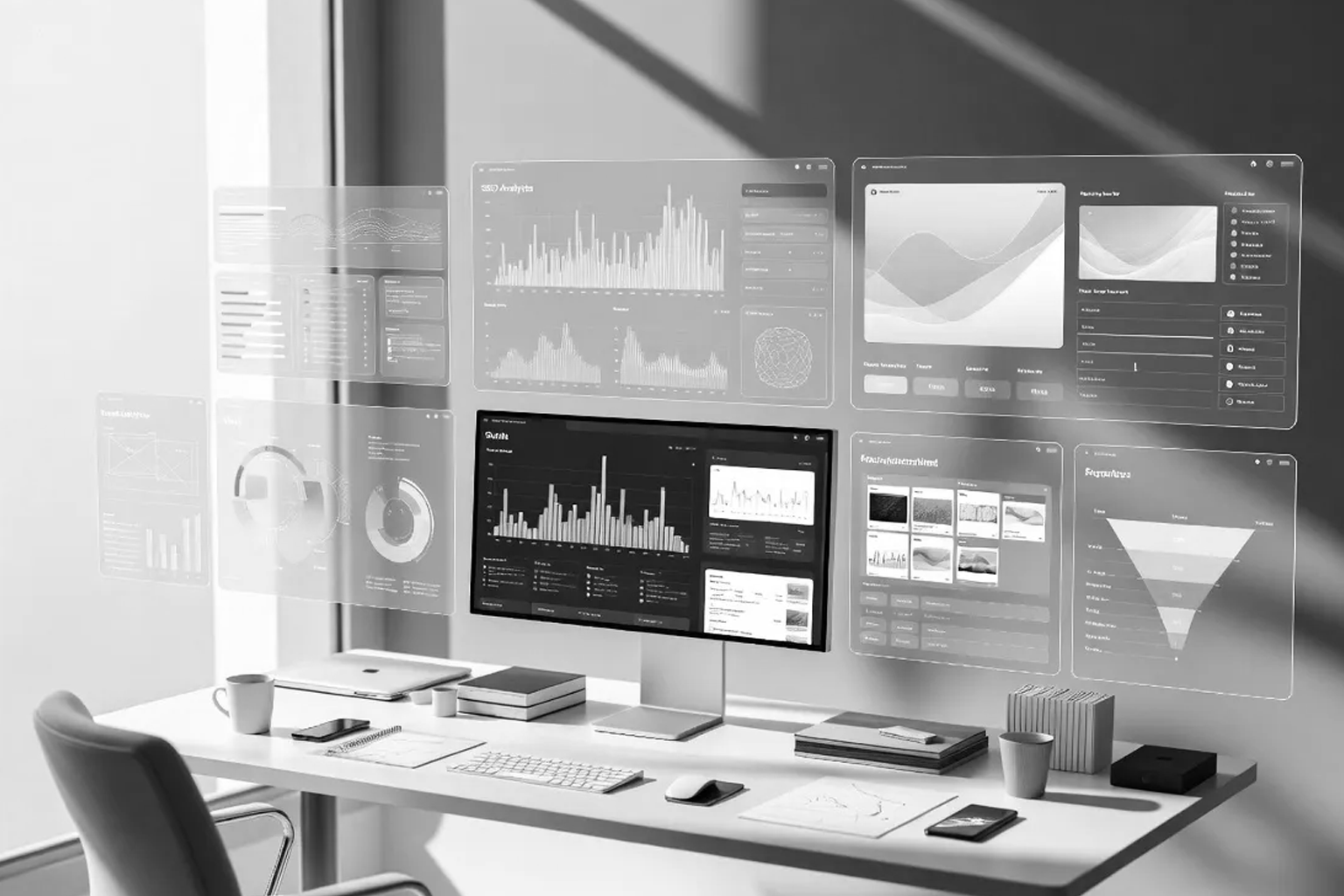
A functional B2B virtual office in 2026 is not Second Life. It is a branded, persistent,
browser accessible 3D environment that serves as a living portfolio, meeting space, and
sales room simultaneously.
Think of it across three functional layers:
- The Lobby Layer: Your brand’s first impression space. Spatial design follows Gestalt Principles of proximity and continuity, guiding visitor attention naturally toward key services without instruction.
- The Collaboration Layer: Spatial audio rooms, shared whiteboards, and async video drops. Research from LogRocket on remote UX found that async collaboration tools reduce meeting fatigue by up to 30% when embedded into purposeful environments rather than isolated apps.
- The Proof Layer: An interactive case study wing. Not a PDF. Not a slide deck. A walkable portfolio where clients can literally move through your past work, experiencing outcomes in context rather than reading about them in a sans serif font.
The Von Restorff Effect: Why Distinctiveness Is Now a Revenue Strategy
The Von Restorff Effect, sometimes called the “isolation effect,” is a well documented cognitive phenomenon. It states that an item that stands out from its peers is far more likely to be remembered. In a B2B landscape where every agency has a dark mode website, a “we’re passionate about results” homepage, and a Calendly link, standing out is not a brand strategy. It is a survival strategy. A virtual office is, by definition, distinctive. Your prospect will pitch you at their next internal meeting because they will remember you. That memory advantage is not soft ROI. It compounds. According to HubSpot Research, referred clients from memorable brand interactions close at nearly twice the rate of cold outbound leads. The von Restorff Effect is not about being loud. It is about being unlike the alternatives. A virtual office achieves this without a rebrand.
Loss Aversion and the Agency Pitch That Sells Itself
Here is a behavioral economics angle worth sitting with. Loss Aversion, popularized by Kahneman and Tversky and widely covered by BehavioralEconomics.com, tells us that the pain of losing something is roughly twice as powerful as the pleasure of gaining the equivalent thing. Applied to B2B sales, this means your prospects are not just asking “what do we gain from working with this agency?” They are quietly asking “what do we lose by not working with them?” A virtual office activates loss aversion naturally. When a prospective client tours your immersive environment and sees a competitor’s logo in your client wall, experiences your team’s collaborative culture spatially, and walks away with a visceral sense of what working with you feels like, the decision not to hire you stops feeling neutral. It starts feeling like leaving something on the table. That psychological shift is worth more than any brochure you have ever printed.
The SEO Case for Immersive Environments (Yes, Really)
You might be wondering what a virtual office has to do with search visibility. Quite a lot, as it turns out. Generative Engine Optimization (GEO) is the practice of structuring your digital presence so that AI search engines like Google SGE and Perplexity can extract and cite your content as authoritative. According to Search Engine Journal’s 2025 report on AI search behavior, topical authority is increasingly measured not just by content depth but by the breadth of contextual signals your brand produces. A virtual office generates a layer of content signals that traditional websites cannot. Spatial metadata, structured tour transcripts, embedded case study narratives, and async video content all feed AI crawlers with rich, extractable material. Ahrefs’ research on semantic search confirms that content clusters which surround a primary keyword with experiential context outperform purely text based competitors. Your virtual office is not just a meeting room. It is a content infrastructure.
The Practical Objections, Addressed Without Sugarcoating
Most agencies reading this have three immediate objections. Let us handle them quickly. “It’s too expensive.” The barrier to entry has dropped sharply. Platforms like Gather.town, Teamflow, and custom WebXR builds via Three.js (documented extensively on web.dev) can be deployed at a fraction of what a full office renovation costs. The ROI question is not “can we afford it” but “can we afford to be the last agency in our vertical to do this.” “Our clients won’t use it.” According to Gartner’s 2025 Digital Workplace survey, over 62% of enterprise decision makers under 45 have already participated in a virtual business environment. That number is not a trend line. It is a threshold already crossed. “We don’t have the technical team.” This is where a digital agency partner becomes non negotiable. The stack required includes WebGL rendering, spatial audio integration, real time collaboration APIs, and responsive 3D design. It is a full service problem. Which, conveniently, is exactly what full service agencies exist to solve.
How to Think About Your Virtual Office Strategy in Three Phases
The biggest mistake agencies make is treating this as a single launch moment. It is an evolving spatial product, not a microsite. Phase One: Foundation Build the base environment. Establish your spatial brand language. Define the three functional zones (lobby, collaboration, proof). Launch with a soft beta to existing clients and gather qualitative feedback. Phase Two: Integration Connect your CRM data, calendar tools, and async video platforms into the environment. Chief Martec’s coverage of martech consolidation trends suggests that integrated spatial environments perform significantly better than standalone ones because they reduce context switching for both your team and your clients. Phase Three: Optimization Use heatmap equivalents for spatial environments (yes, these exist) to understand where visitors dwell and where they drop off. Apply Hick’s Law here: if your virtual lobby presents too many doors, visitors will choose none. Simplify navigation ruthlessly based on behavioral data.
The Honest Bottom Line
The metaverse for B2B is not a bet on a speculative future. It is a practical response to a present problem: your digital presence is indistinguishable from everyone else’s, your prospects are cognitively exhausted by fragmented touchpoints, and the agencies winning in 2026 are the ones who made their brand spatially memorable before the rest of the market caught on. A virtual office is not a replacement for great work. It is the architecture that makes great work impossible to forget. The agencies who figure this out first will not just close more deals. They will redefine what “showing up” means in a B2B context. Everyone else will spend the next two years explaining why they waited.
A Quick Reference: What This Post Argues
- Immersive virtual offices reduce cognitive load and accelerate B2B trust building
- The Von Restorff Effect makes spatial environments a natural distinctiveness tool
- Loss Aversion makes the sales process more visceral and conversion more likely
- GEO and semantic SEO reward the contextual content signals a virtual office generates
- The technical and financial barriers to entry are no longer a valid reason to delay Webifii builds digital experiences for brands that refuse to be forgettable. If you want an honest assessment of where your current digital presence stands and what it would take to future proof it, we offer a no pressure Digital Design and Development Audit. No slide decks full of buzzwords. Just a clear picture of where you are, and a practical path to where you should be. Reach out to the Webifii team and let us start that conversation.