
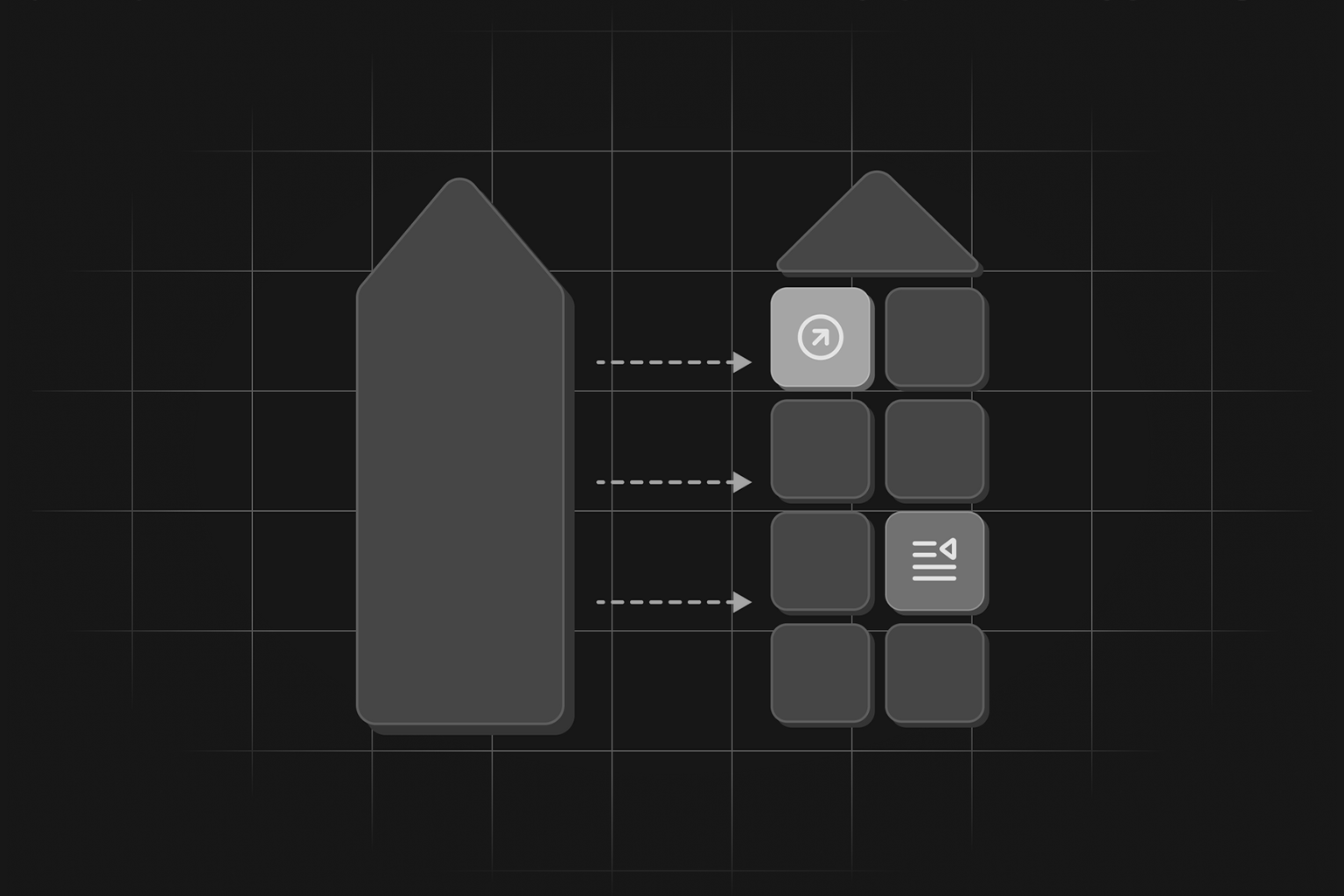
You have likely felt the frustration of the “Traditional CMS” bottleneck. You want to update a piece of content, but it breaks the frontend layout. You want to launch a mobile app, but your backend is hopelessly tied to your desktop website. You are trapped in a monolithic marriage where the backend and the frontend are joined at the hip, and every small change feels like open heart surgery. At Webifii, we believe that the future of high end development belongs to those who have the courage to “decapitate” their digital presence. Headless architecture is not just a technical trend; it is a strategic liberation. By separating where your content lives (the backend) from where it is presented (the frontend), you unlock a level of agility, performance, and security that monolithic systems simply cannot match.
The Psychology of the Monolithic Trap
The reason many founders cling to monolithic systems like traditional WordPress or Adobe Experience Manager is rooted in Loss Aversion. The idea of moving away from a “unified” system feels like losing a safety net. You worry that by decoupling your stack, you are introducing complexity and “losing” the ease of a single dashboard. In reality, the monolith is the ultimate source of Cognitive Load. When your backend and frontend are intertwined, every developer has to understand the entire system just to make a small change. This “context switching” tax slows down your innovation and increases the likelihood of errors. Headless architecture reduces this load by allowing your content team to focus on “what” they are saying, while your developers focus on “how” it is shown.
- Monoliths create “Single Points of Failure” where a backend bug crashes the user experience.
- Decoupling allows teams to work in parallel, significantly increasing your velocity.
- High end brands value “Systemic Resiliency” over the false comfort of a single vendor.
Headless as Choice Architecture for Content
In behavioral economics, Choice Architecture is about how you present options to influence decisions. In a headless environment, your content is stored as “Pure Data” via an API. This means you can present that data in any “Choice Environment” you choose: a website, a smartwatch, a VR headset, or an AI agent’s chat interface. You are no longer designing for a “Page.” You are designing for a “Context.” This flexibility allows you to apply the Von Restorff Effect with surgical precision. Because your frontend is independent, you can create highly unique, high performance experiences that stand out from the generic “templated” look of monolithic competitors. You aren’t just presenting information; you are architecting a journey.
- Content becomes an “Asset” that lives forever, independent of the design “Skin.”
- Multi channel distribution becomes a “Push” rather than a “Rebuild.”
- Innovation happens at the “Edge,” where the user actually interacts with your brand.
The GEO Edge: Why AI Search Prefers Headless
As we navigate the 2026 landscape of Generative Engine Optimization (GEO), the technical structure of your content is your primary ranking factor. AI engines like Google SGE and Perplexity are looking for “Clean Data.” Monolithic sites often bury their content in layers of legacy HTML, bloated plugins, and “Theme Junk.” Headless architecture serves content through structured APIs. This makes it incredibly easy for AI agents to crawl, parse, and “summarize” your authority. By providing a “Headless” source, you are essentially giving AI a direct line to your brand’s brain. We have found that sites built on headless frameworks see significantly higher “Citation Rates” in generative search results because their “Information Gain” is so much easier to verify.
- Structured content is the “Language of AI.”
- API driven data reduces the “Scraping Friction” for generative engines.
- Technical authority is verified by the cleanliness of your “Data Handshake.”
The Performance Paradox of the Decoupled Stack
Data from web.dev and Smashing Magazine confirms that headless sites are consistently faster than their monolithic counterparts. This is because the frontend can be built using modern, “static first” frameworks like Next.js or Astro. These frameworks pre render your pages, meaning the browser gets a fully formed experience without waiting for a database to “think.” At Webifii, we view performance as a “Functional Trust Signal.” A site that loads in 400 milliseconds tells the user that you are operationally elite. A monolithic site that “stutters” as it pulls data from a bloated backend signals technical debt. In 2026, slowness is a brand defect that no amount of “high end” design can cover up.
- Headless allows for “Instant Transitions” that feel like a native app.
- Reduced server side rendering lowers your “Time to First Byte” (TTFB).
- Luxury is defined by the absence of the “Loading Spinner.”
Security as a Competitive Advantage
One of the most witty observations about the digital industry is that we still build “Fortresses” (monoliths) and then act surprised when someone finds a “Backdoor” (a plugin vulnerability). Headless architecture changes the security game by “Hiding the Backend.” Since your content lives behind an API, there is no direct path for a malicious actor to “hack” your database through your frontend. This “Security through Obscurity” is backed by the data from LogRocket and Stack Overflow. By decoupling the layers, you reduce your “Surface Area of Attack.” You can update your frontend without touching your backend, and you can secure your content behind enterprise grade API gateways. For a premium brand, a security breach is a Reputational Loss” that can take years to recover from. Headless is your digital insurance policy.
- Decoupling prevents “Cross Site Scripting” (XSS) from reaching your core data.
- Static frontends have no “Live Database” to exploit.
- Maintenance becomes “Proactive” rather than “Reactive.”
One of the most witty observations about the digital industry is that we still build “Fortresses” (monoliths) and then act surprised when someone finds a “Backdoor” (a plugin vulnerability). Headless architecture changes the security game by “Hiding the Backend.” Since your content lives behind an API, there is no direct path for a malicious actor to “hack” your database through your frontend. This “Security through Obscurity” is backed by the data from LogRocket and Stack Overflow. By decoupling the layers, you reduce your “Surface Area of Attack.” You can update your frontend without touching your backend, and you can secure your content behind enterprise grade API gateways. For a premium brand, a security breach is a “Reputational Loss” that can take years to recover from. Headless is your digital insurance policy.
The Contrarian Take: Why Headless is “Simpler” in the Long Run
The common criticism of headless is that it is “too complex.” We argue the opposite. While the initial setup requires more strategic depth, the “Long Term Maintenance” is vastly simpler. In a monolith, you are constantly fighting “Version Conflicts” between your theme, your plugins, and your core software. It is a house of cards that gets more unstable every year. A headless system is modular. If you want to change your frontend framework in three years, you don’t have to migrate your content. You just “plug in” a new head. This “Modular Durability” is what future proofs your brand. You are building a system that is designed to change, rather than a system that is designed to rot.
- Modularity prevents “Technical Lock In.”
- You can swap “Service Providers” without rebuilding your entire business.
- The “Total Cost of Ownership” (TCO) drops as the system ages.
Applying Jakob’s Law to Headless UI
Jakob’s Law suggests that users prefer your site to work like all the others they visit. However, in 2026, the “other sites” users are visiting are high performance, app like experiences. If you are still serving “Page Refreshes” from a 2015 era monolith, you are violating the user’s mental model of a modern brand. Headless allows you to deliver the “App Like” interactions that users now expect. We use headless frameworks to create “Seamless State Management,” where the user never feels like they are “navigating” a website. They are simply moving through an experience. This level of “Technical Fluency” is a prerequisite for being perceived as a leader in your niche.
- Smooth transitions build “User Confidence.”
- Headless architecture supports the “Instant Feedback Loops” of modern UI.
- Don’t make users “Wait” for the web to catch up to their expectations.
Future Tech: The Move Toward “Omnichannel Authority”
As we look toward the end of 2026, we are seeing the rise of “Ambient Computing.” Your brand will soon be accessed through smart mirrors, car dashboards, and voice assistants. A monolithic website cannot scale to these “Heads.” It is a prisoner of the browser. A headless system is “Omnichannel” by default. Your content is a “Global Resource” that can be called by any device. This is how you build “Topical Authority” in a world where the browser is just one of many windows. By adopting headless now, you are positioning your brand to be the “Primary Source” for whichever device becomes the next big thing.
- Your brand should be “Platform Agnostic.”
- API first design is the foundation of “Future Tech” integration.
- Headless is the “Infrastructure of Influence.”
Summary of the Headless Growth Framework
To move beyond the “Monolithic Trap,” you must stop viewing your website as a “Document” and start viewing it as a “Data Powered Experience.” Headless architecture is the key to unlocking this shift.
- Primary Goal: Separate the “Content” from the “Presentation” to increase agility.
- Secondary Goal: Optimize for GEO and AI agents through “Clean Data” APIs.
- Long Term Goal: Build a “Modular Brand” that can scale to any device or platform. The “Decapitation” of your monolith might feel like a big step, but it is the only way to ensure your brand doesn’t lose its head in the fast moving economy of 2026. You deserve a system that works for you, rather than a system that you have to work for. If you are ready to explore how a decoupled architecture can revitalize your brand and provide the technical edge you need to dominate your market, we are here to guide you. We invite you to reach out to us at Webifii for a Digital Design or Development Audit. We
will help you see the “Future Proof” potential of your brand and build the “Headless” foundation your expertise deserves. Would you like me to map out a “Headless Migration Strategy” for your current site to show you exactly how we can decouple your content without disrupting your current operations? Get in touch!