
By Webifii | Digital Strategy & Brand Intelligence
You have done it. We have all done it.
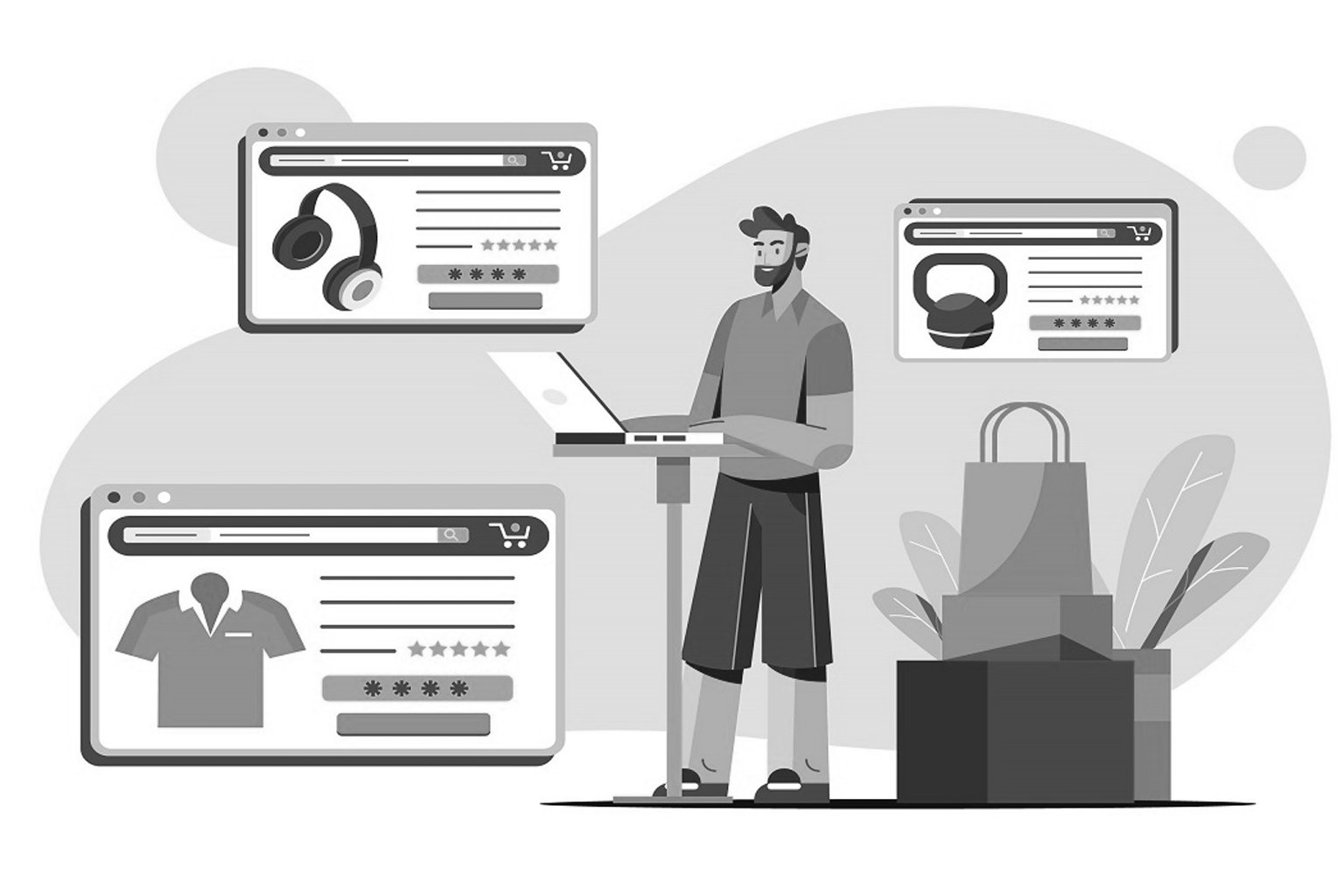
You open three browser tabs, compare specs side by side, screenshot the cheaper option, and then calmly spend twice as much on the premium alternative anyway. No guilt. Full conviction. You tell yourself it was the right call.
It was. But not for the reasons you think.
The Real Question Is Not About Price
Most brand strategists frame this as a loyalty problem or a value perception gap. They are wrong.
The real question is a neuroscience question. When a customer compares prices, they are not shopping. They are performing a ritual that gives their rational brain permission to do what their emotional brain already decided.
Understanding this distinction is the single most valuable insight you can bake into your digital brand strategy in 2026.
The Cognitive Load Theory Hiding in Plain Sight
Here is something the Nielsen Norman Group has been documenting for years: the human brain is not built for complex decision making at scale.
Cognitive Load Theory, developed by educational psychologist John Sweller, tells us that our working memory has a hard cap. When faced with too many variables, the brain does not evaluate them all. It offloads the decision to a mental shortcut, and that shortcut is almost always trust in the familiar brand.
This is not weakness. It is efficiency.
When your digital experience reduces friction, communicates authority clearly, and presents information in a hierarchy the brain can process quickly, you are not just making a nice website. You are literally reducing the cognitive cost of choosing you.
Premium brands win at this. Their digital environments are designed to feel inevitable, not persuasive.
The Comparison Trap Is Actually a Trust Test
Here is the contrarian take most strategists miss entirely.
Price comparison behavior is not a threat to premium brands. It is a trust test that premium brands are built to pass.
When a customer opens that cheaper tab, they are not genuinely considering it. They are looking for a reason to feel uncomfortable. A misaligned visual identity. A slow page load. A poorly structured checkout. Any friction that confirms what their gut already said: this one does not feel right.
Research from CXL and Irrational Labs consistently shows that digital trust signals, including visual coherence, page performance, and microcopy quality, can shift conversion rates by 20 to 35 percent even when a competitor is priced lower.
The comparison tab is the audition. Your digital brand is the performer.
Loss Aversion: The Engine Under the Hood
Let us bring in the behavioral economics that actually drives this.
Daniel Kahneman’s foundational work, cited extensively on BehavioralEconomics.com, established that losses feel roughly twice as powerful as equivalent gains. This is Loss Aversion, and it is the invisible engine behind premium brand purchases.
When a customer looks at a cheaper alternative, their brain does not calculate savings. It calculates risk.
- What if the quality is worse?
- What if the support is nonexistent?
- What if I have to buy it again in six months?
The premium brand is not competing on price. It is competing on the elimination of regret. And a well executed digital presence, with clear social proof, confident UX writing, and a trustworthy visual hierarchy, is what makes that regret feel impossible.
This is why a premium brand’s website that feels cheap actively destroys its own pricing power. The medium is the message, and a sluggish, inconsistent digital experience is screaming the wrong one.
The Von Restorff Effect and Why Differentiation Is a Neurological Event
The Von Restorff Effect, sometimes called the Isolation Effect, states that an item that stands out from its peers is more likely to be remembered and chosen.
This is not a marketing theory. It is a documented cognitive phenomenon.
When your brand occupies a distinct visual and experiential space in the customer’s memory, you are not just top of mind. You are the anchor against which every competitor is measured. All comparison activity now happens relative to you.
Premium brands engineer this systematically. They do not try to be the best option in a category. They try to be the only option in a category they define themselves.
Think about how Apple does not compete in the laptop market. It defines what a laptop should feel like, and everyone else is measured against that feeling.
Your digital brand identity, executed at the highest level of craft, is how you claim that anchor position.
The Role of Digital Experience in Justifying a Premium Price
Here is where it gets tactical, and where Webifii sees this play out with clients daily.
A customer’s willingness to pay a premium is not fixed. It is a function of their experience of your brand across every touchpoint. HubSpot Research has shown that 75 percent of consumers judge a company’s credibility based on its website design alone.
That number should terrify any premium brand running a website that has not been seriously invested in.
The digital experience is the most scalable, highest leverage trust signal you own. A slow site signals a slow operation. A cluttered layout signals a cluttered product. Poor typographic hierarchy signals poor attention to detail.
Conversely, a precise, confident, and fast digital presence signals exactly what a premium customer needs to hear: these people sweat the details, and so does their product.
Hick’s Law and the Architecture of Confident Buying
Hick’s Law, a foundational UX principle, states that the time it takes to make a decision increases logarithmically with the number of choices presented.
This has a profound implication for premium brand strategy: fewer options signal higher confidence.
When a premium brand presents a curated, opinionated product lineup instead of an overwhelming catalogue, it is not limiting customer choice. It is performing editorial authority. It is saying, “we have already done the thinking for you.”
This is Choice Architecture at its most effective. You are not removing customer agency. You are removing customer anxiety.
Smashing Magazine and A List Apart have both documented how simplified navigation structures and intentional information hierarchies lead to higher average order values, not just higher conversion rates.
Simplicity, executed with confidence, is a pricing strategy.
The Reciprocity Loop That Closes the Sale
One final behavioral mechanism worth naming directly.
Robert Cialdini’s Principle of Reciprocity, widely cited across Irrational Labs and CXL case studies, establishes that humans feel compelled to return value when value is given freely.
A premium brand that delivers a genuinely useful, generous, frictionless digital experience before any transaction occurs is not just being polite. It is triggering a psychological obligation in the customer.
Free resources, editorial depth, a well designed product configurator, a generous returns policy made visually prominent, all of these are reciprocity investments.
The customer who feels respected and served before they pay is the customer who does not hesitate at the price point. They are already in the middle of a relationship, not the beginning of a transaction.
What This Means for Your Brand Strategy in 2026
Let us pull this together into something you can act on.
- Your digital presence is your price justification. If your website does not feel premium, your price point will not survive contact with a comparison tab.
- Comparison behavior is a filter, not a threat. Build a brand experience that makes the cheaper option feel risky, not just inferior.
- Reduce cognitive load at every touchpoint. Clear hierarchy, confident copy, and fast performance are not nice to haves. They are revenue architecture.
- Own an anchor position. Use the Von Restorff Effect deliberately. Be so distinct that competitors are measured against you.
- Make the pre purchase experience generous. Reciprocity is not soft strategy. It is a documented conversion mechanism.
The Uncomfortable Truth for Business Owners
If your customers are comparing prices and choosing a competitor, the problem is rarely your price.
It is almost always your digital signal. The brand experience you project online is either confirming the premium position you want to hold, or quietly undermining it while you wonder why the numbers are not moving.
The good news is that this is entirely fixable. And the brands that fix it in 2026, before the AI search landscape fully reshapes how purchase intent is formed and expressed, will hold category anchor positions that are genuinely difficult to displace.
The window is open. But it does not stay open.
Ready to Find Out Where Your Digital Brand Is Leaking Trust?
At Webifii, we run deep Digital Design and Development Audits for premium brands that want to close the gap between the brand they are building and the experience they are actually delivering.
If you are curious about where your digital presence is winning, and where it might be quietly losing the comparison tab test, we would genuinely enjoy that conversation.
Reach out to the Webifii team. No pressure, no pitch deck. Just an honest look at your brand’s digital health.
Webifii is a premium digital agency specializing in high end design and development for brands that take the details seriously.