By Webifii | Digital Strategy | 2026
Let us be honest about something most agencies will not tell you. The reason your customer acquisition cost (CAC) keeps climbing has very little to do with your ad budget. It has everything to do with the experience people land on after they click.
You can pour money into Google Performance Max and Meta Advantage+ all day long. But if your landing page loads in 4.2 seconds, your form has nine fields, and your value proposition sounds like it was written by a committee, that spend is essentially a donation to the duopoly.
Reducing CAC in 2026 is a design and development problem masquerading as a marketing problem. Let us unpack that.
The Real Cost Driver Nobody Is Talking About
Most growth teams obsess over top of funnel metrics. CPCs, impressions, click through rates. These are vanity metrics dressed in business casual.
According to research from CXL Institute, the average business loses between 68% and 92% of its paid traffic before a conversion event. That means for every ten people you pay to acquire, you are likely converting fewer than three. The ad spend is not the problem. The conversion architecture is.
HubSpot Research reinforces this. Their behavioral data consistently shows that friction in the post click experience, specifically slow load times, confusing navigation, and unclear calls to action, is the primary driver of bounce and abandonment. Fix the experience, and your effective CAC drops without touching your ad budget.
This is not a small optimization. It is a structural shift in how you think about growth investment.
Hick’s Law and the Hidden Tax of Too Many Choices
Here is a principle from UX that should be tattooed on every growth marketer’s forearm. Hick’s Law, formalized by William Edmund Hick in 1952 and validated repeatedly in modern UX research by the Nielsen Norman Group, states that the time it takes a user to make a decision increases logarithmically with the number of choices presented.
In plain terms, more options mean more hesitation. More hesitation means lower conversion. Lower conversion means higher CAC.
When you present a new visitor with five CTAs, a sticky navigation bar with twelve links, a pop up, a chat widget, and a promotional banner, you are not giving them freedom. You are cognitively paralyzing them. They leave. You pay again to bring them back.
The fix is ruthless simplification. One primary action per page. One clear value statement above the fold. One path forward.
Why Your Website Is Your Most Expensive CAC Problem
According to web.dev and core web vitals benchmarks published by Google, pages that load within 2.5 seconds convert at significantly higher rates than those that do not. Smashing Magazine has documented cases where a single second of latency improvement delivered double digit conversion rate gains for e-commerce brands.
Think about what that means for your CAC math. If your conversion rate doubles, your effective cost per acquisition is cut in half. Without changing your ad spend by a single rupee.
Performance is not a developer concern. It is a CFO concern. And most businesses are leaving that money on the table because they treat their website as a brochure rather than a growth asset.
Webifii’s development philosophy is built on this premise. Every millisecond has a dollar value.
The Principle of Reciprocity and the Acquisition Shortcut Most Brands Miss
Behavioral economist Robert Cialdini’s Principle of Reciprocity, extensively studied and documented by BehavioralEconomics.com and Irrational Labs, tells us something powerful. When you give something of genuine value first, people feel a psychological pull to give back.
For B2B and high consideration purchases, this is the single most underutilized CAC reduction lever available. A genuinely useful free tool, a diagnostic, a calculator, or a no fluff resource, earns trust before you ever ask for a commitment.
The key word is genuinely. A gated PDF titled “10 Tips for Better Marketing” that reads like a 2019 blog post recycled into a PDF does not trigger reciprocity. It triggers irritation.
When done right, reciprocity led acquisition cuts your paid dependency significantly, builds a warmer audience for retargeting, and improves the quality of leads coming in. Quality leads convert faster. Faster conversion = lower CAC.
Retention Is the Underrated CAC Reduction Strategy
Here is a contrarian take that the performance marketing crowd will not thank us for. The most effective way to reduce your customer acquisition cost is to stop needing to acquire so many new customers.
Bain and Company research, cited widely across the growth strategy community including
Reforge, suggests that increasing customer retention by just 5% can increase profits by 25% to 95%. When existing customers refer, repurchase, and expand, your organic and referral acquisition channels grow proportionally.
This shifts the entire CAC conversation. Instead of asking “how do we make paid cheaper,” the more powerful question is “how do we build an experience so good that our customers become our acquisition channel?”
That is a product and design question. And most companies are not asking it.
SEO as a CAC Reduction Engine, Not Just a Traffic Play
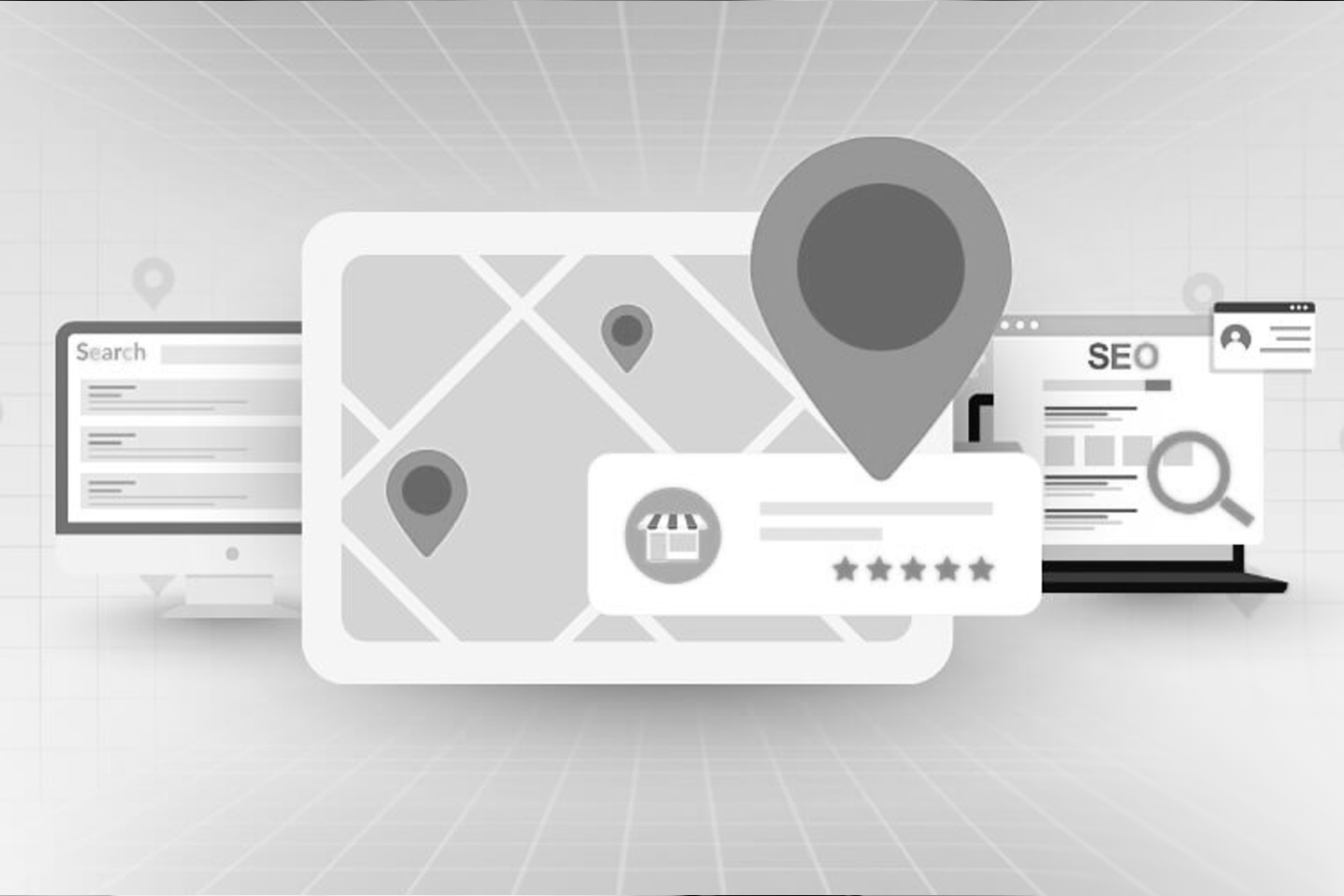
Organic search remains the highest intent, lowest cost acquisition channel available. According to Ahrefs’ data, the top result on Google captures approximately 27% of all clicks for a given query. SparkToro research shows that the majority of content discovery still happens through search, even as AI Overviews and generative search reshape the results page.
The implication for businesses in 2026 is significant. Investing in topical authority, specifically publishing deeply useful, semantically rich content that answers the full spectrum of buyer questions, reduces your dependence on paid acquisition over time.
Search Engine Journal has documented brands that reduced paid CAC by over 40% within 18 months, simply by building out a content architecture that captured mid and bottom funnel intent organically.
The compounding math here is staggering. Paid CAC resets to zero every time you stop spending. Organic CAC amortizes over years.
The Von Restorff Effect and Standing Out in a Saturated Feed
In 1933, psychiatrist Hedwig von Restorff demonstrated that items which stand out from their surroundings are far more likely to be remembered. This is now known as the Von Restorff Effect, or the isolation effect, and it has direct implications for your digital acquisition strategy.
In a feed full of identical blue buttons, white backgrounds, and stock photography of people pointing at laptops, differentiation is not a brand luxury. It is a conversion necessity.
Distinctive creative, whether that is in your ad units, your landing page design, or your email sequences, reduces the cognitive load of decision making by triggering memory encoding faster. People remember you. They click again. They convert. Your remarketing costs drop.
This is where premium design pays for itself in CAC terms, not just brand equity terms.
The Technical Credibility Signals That Reduce Friction
LogRocket’s behavioral analytics research consistently shows that users who encounter JavaScript errors, broken elements, or inconsistent rendering on a page abandon at dramatically higher rates and almost never return.
Trust is built or destroyed in milliseconds. A visually polished, technically sound experience signals to a visitor’s brain, often below conscious awareness, that you are competent and safe to transact with. A broken experience signals the opposite.
According to A List Apart and established UX practice, users apply Gestalt Principles instinctively. Consistency, alignment, and visual hierarchy are not aesthetic preferences. They are trust signals that reduce the psychological cost of converting. Lower psychological cost = higher conversion rate = lower CAC.
Webifii’s design and development process is built around eliminating exactly these kinds of trust destroying micro failures before they reach production.
Building a CAC Reduction Flywheel
So what does a systematic approach look like? Think of it as a flywheel with four interconnected components.
- Convert better first. Before spending more on acquisition, fix the leaks in your current funnel. Even a 0.5% improvement in conversion rate materially lowers CAC.
- Build organic equity. Invest consistently in SEO and content that captures intent at every stage of the buyer journey. This compounds. Paid spend does not.
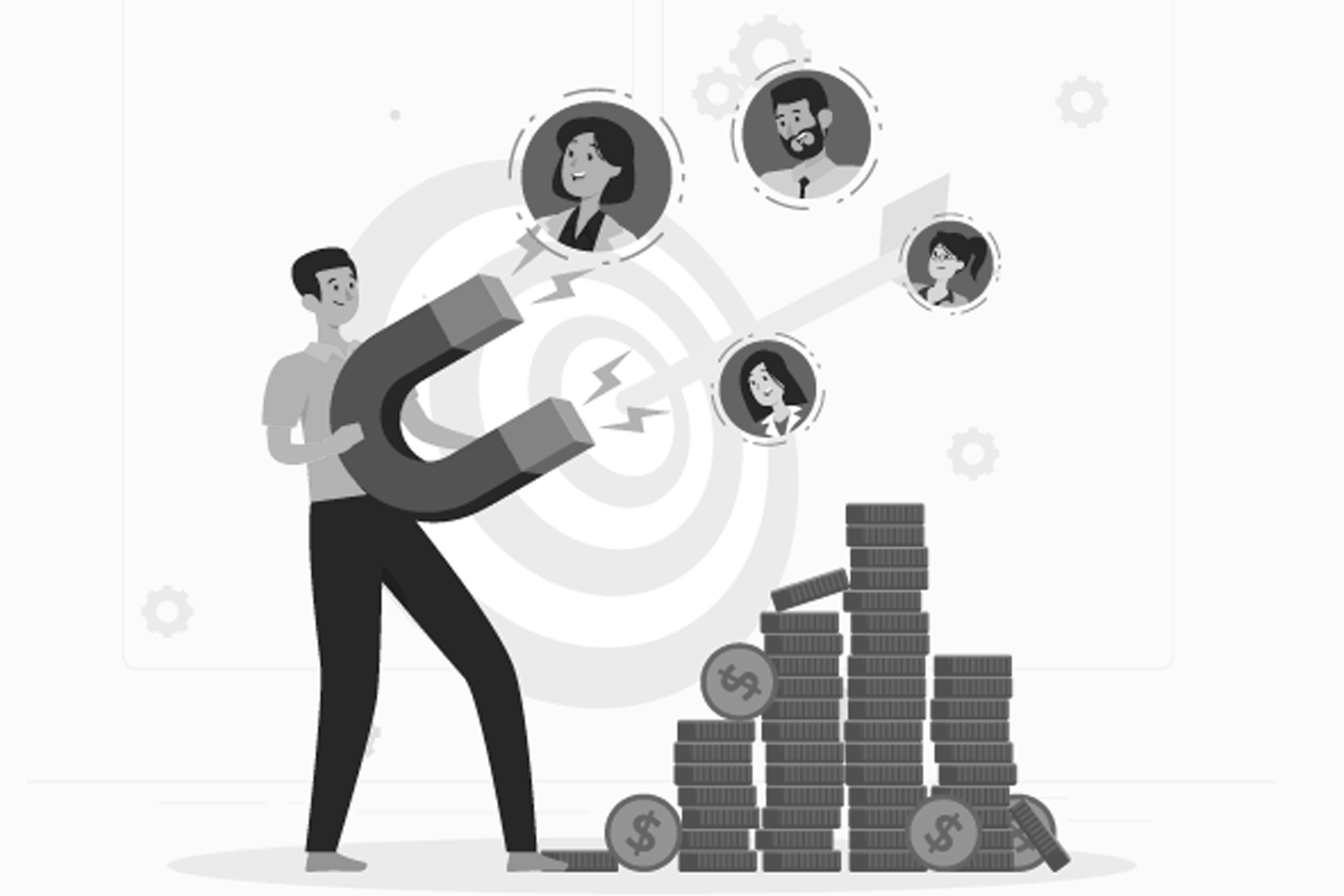
- Engineer referral and retention loops. Design your product and post purchase experience to generate word of mouth and repeat purchase. Your best customers are your cheapest acquisition channel.
- Differentiate with design. In a commoditized attention economy, distinctive and technically excellent experiences are a competitive moat that competitors cannot easily copy.
Each of these elements reinforces the others. As conversion rates improve, you can afford to test more acquisition channels. As organic traffic grows, you reduce paid dependency. As retention improves, lifetime value grows, which means you can afford a higher CAC even as you work to lower it.
The Number Most Businesses Are Not Tracking
Customer Acquisition Cost without context is a useless metric. The number that actually matters is the ratio of Customer Lifetime Value to CAC, or the LTV to CAC ratio. According to Reforge and widely accepted SaaS benchmarking, a healthy LTV to CAC ratio is 3:1 or higher.
If your LTV is Rs. 60,000 and your CAC is Rs. 20,000, you are in reasonable shape. But if you can improve your product experience to the point where LTV climbs to Rs. 90,000 because customers stay longer and spend more, suddenly that same CAC looks like a bargain.
This reframes the entire problem. The question is not just “how do we acquire cheaper.” It is “how do we build something worth more.”
That is a design, development, and strategy question. And it is the question worth obsessing over in 2026.
The Bottom Line
Reducing customer acquisition cost is not fundamentally a media buying problem. It is a product, design, and engineering problem.
The businesses that will win in the next three years are not the ones with the biggest ad budgets. They are the ones that convert better, retain longer, and build systems where each customer makes the next one easier to acquire.
The good news is that most of your competitors are still trying to outspend the problem. That means the opportunity to outbuild them is wide open.
If you want to understand where your digital experience is leaking acquisition budget, Webifii offers a focused Digital Design and Development Audit. We look at the full picture, from performance and conversion architecture to brand trust signals and technical health, and tell you exactly where the highest leverage improvements are. Reach out when you are ready to treat your website as the growth asset it should be.
Keywords integrated throughout: customer acquisition cost, reduce CAC, conversion rate optimization, digital acquisition strategy, LTV to CAC ratio, organic acquisition, paid acquisition, landing page conversion, UX and CAC, customer retention strategy, growth flywheel, topical authority SEO.